

Written by Will Pavia
October 26, 2026
Danielle de Niese talks to Will Pavia about why she’s telling the shocking story of an 18th-century singer
There’s a moment in the new documentary The Handel Scandal when the opera star Danielle de Niese turns up at a choir practice in a village hall. “You don’t mind if I just hum along?” she says to the chap in charge.
Then she goes and stands among the singers of Horam in East Sussex, in their jumpers and cardigans, as they have a crack at Handel’s Messiah. De Niese hums along, smiling politely, generally refraining from opening up that imposing voice of hers and blowing the windows out of their casements.
It’s a striking scene because de Niese is not really known for holding back. She has a mighty, all-enveloping personality, whether you are watching her from the cheap seats or sitting across a table from her at a hotel restaurant in the West End, as I am now. I suppose she has to do it sometimes, though, at carol services.
“Yeah,” she says. “But it has to be said that sometimes even if I’m just singing gently, I get this person in front of me going, like, ‘Who’s that?’” She does an impression of a head whipping round and a pair of eyes glancing at her over a hymn book, wondering where that voice is coming from.
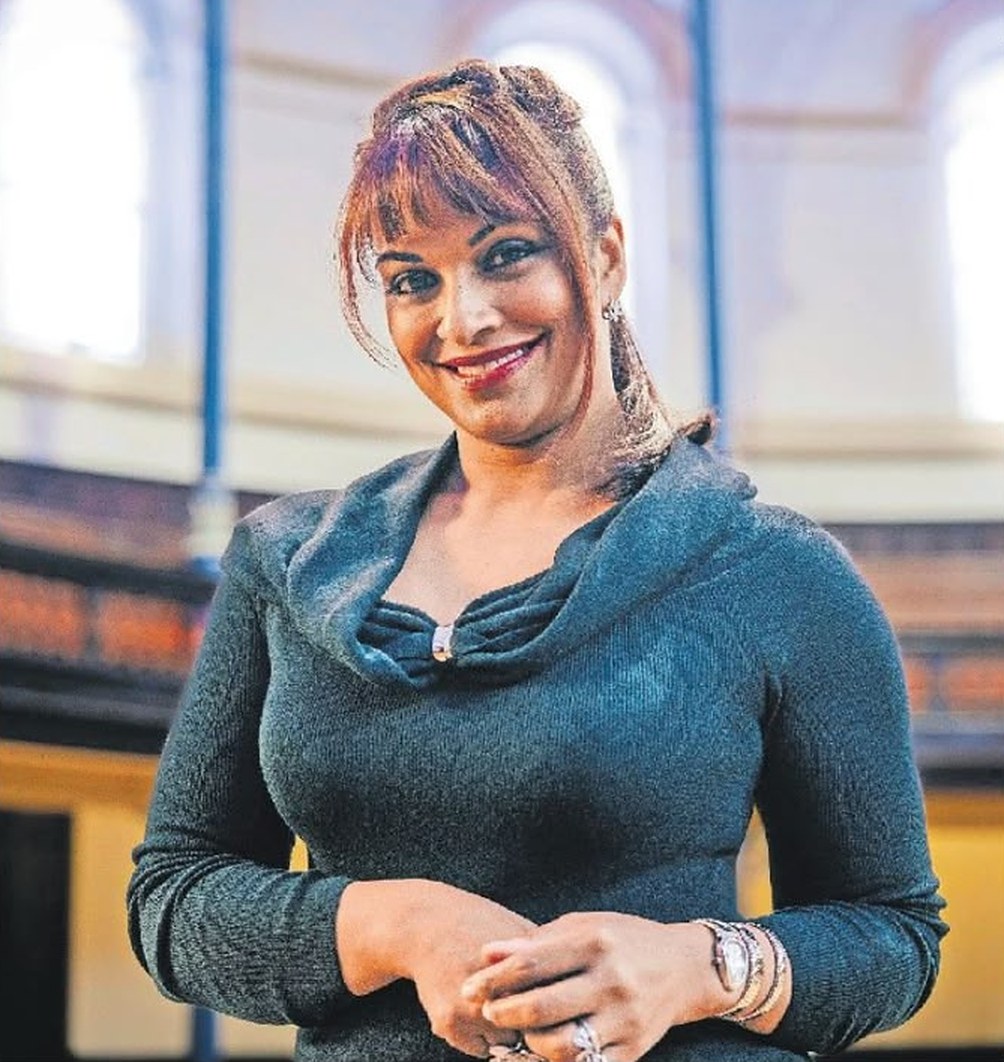
De Niese is 47. She has large brown eyes and a wide, vaguely incorrigible smile. As she talks her hands move from her collarbone to her auburn hair and then to the air above it. Her voice has been turning heads since she was eight when, as the daughter of two Sri Lankan émigrés to Melbourne, she began winning singing contests. The family moved to Los Angeles and then New York, where she made her Met debut at 19. She sells out opera houses, performs in films and musicals, and sings with tenors and rappers.
For her next trick she is presenting The Handel Scandal for Sky Arts. It’s a film that seeks to restore to the public eye Susannah Cibber, a largely forgotten 18th-century singer. Cibber was felled by a shocking sex scandal and then rescued by, of all people, the baroque and bewigged George Frideric Handel, the composer of English church music, whose name, excellently, rhymes with scandal.
De Niese was raised on Handel. Her mum taught her the arias from Messiah when she was 11. She got interested in Cibber, his sometime muse, because she saw in her career some parallels to her own. Cibber did opera and theatre.
“She was this unclassifiable element,” de Niese says. “And those are parts of her that I can relate to because I’m literally sitting here across from you about to go and do Hadestown [at the Lyric Theatre, in the role of Persephone] and I’ll be at Covent Garden next year doing La bohème. Isn’t it funny that 200 years later that’s still a rarity?”
De Niese used to fret about doing a musical in case people started to think “that I was not a serious singer”, she says. That she was, in fact, an entertainer. “Opera debates this a lot,” she says. “I think one can have both in every moment of a dynamic theatrical performance of opera. I really, really believe that. I will die on that hill.” She lays a hand across her heart, as if she is about to pledge her allegiance to the flag. “I believe in the plausibility of every operatic plot I’ve ever performed… when performed as both a theatrical experience and vocal and auditorial experience. I don’t even know if that’s a word.”
De Niese throws herself into the story of Handel and Cibber in the documentary. She did not know about the awful sex scandal and appears to discover the full awfulness of it on camera. Cibber had an abusive husband, Theophilus, who racked up gambling debts. When one of Cibber’s fans, William Sloper, sought an introduction to his heroine, Theophilus started arranging for them to spend the night together, for a fee. “I did tell you he was an appalling human being,” a historian says to de Niese.
Cibber and her fan then fell in love and eloped. The awful husband sued and a court case made all of this public. The newspapers printed saucy engravings. Cibber found herself banished from polite society and even from the theatre, until Handel called on her for the premiere of Messiah, in Dublin, in 1742.
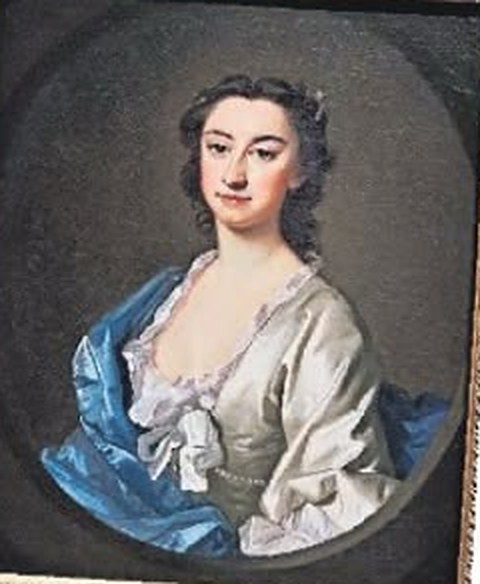
Susannah Cibber
De Niese performs Cibber’s alto parts in the documentary and you have an idea of how it may have been, how neatly Cibber’s circumstances fit the redemptive themes of the oratorio. “Despised and rejected of men,” she sings. “He hid not his face from shame and spitting.”
Cibber had not sung on stage in three years. “I can’t even fathom how frightened she must have been,” de Niese says. “That’s a feeling I know. It’s why I don’t need to jump out of a helicopter on a mountaintop and ski. When my husband does that I’m like: I have enough thrills in my life.”
Her husband is Gus Christie, the chairman of Glyndebourne and the grandson of its founders. They met in 2005 when de Niese rocked up at the country house to play Cleopatra in Handel’s Giulio Cesare. She was a last-minute replacement. It was a smash. She did two seasons there and then “Gus, as he puts it, threw his hat in the ring”, she says. So now she is a star at Glyndebourne while also living there with her husband and their two young children. In the documentary, she says she knows a little bit about having one’s private life subjected to scrutiny “because of where I live and who I’m married to”.
It must be like being the queen of East Sussex. I suppose she has to be on her best behaviour the whole time: she can’t double-park outside the pub or get into a shouting match on the village green. “Thankfully I’m not the type to get into a shouting match anyway,” she says. “I don’t have Tom Cruise status where I can just do anything and it’s fine.” People are mostly very nice. After her nightly performance in Hadestown she gets the train home to East Sussex. Occasionally fellow commuters approach her. “But quite often they wait till I’ve already been on the train with them for quite a long time,” she says. “When I’m getting off they’re like, ‘Hi, by the way, we’re such big fans.’ It’s very sweet.”
But she does meet people who “think that because I’m married to Gus… that I am property of Glyndebourne”, she says. “It’s a small example of people’s societal perception that becomes totally twisted due to the sort of gender politicking. And they go, ‘OK, but then if you’re married to this person and he represents a behemoth of an organisation, are you then property of that?’”
You wonder, actually, how de Niese could ever be contained in rural England, or within the confines of classical music. During a Q&A after a screening of Handel’s Scandal, a journalist playing devil’s advocate said: “Are you too pretty, too sexy, too busty, too bubbly to be a serious artist?” Amazing question.
“I’m very happy she asked it,” says de Niese. Years ago, she says, “I remember thinking, if I ever do a serious recital I’m going to wear a turtleneck dress.” But, she adds, “I’m a girly girl. I’ve had designers who love dressing me.”
And isn’t opera supposed to be sexy and slightly mad? “So that’s the thing!” she says, putting down her teacup. She starts telling me about how she will play Carmen next year. “I’m singing this aria to [Don] José,” she says. “He’s bound me up and he’s in charge of me and I’m sort of like, ‘Come on, don’t you want to let me go?’ And in the middle of this line, he goes, ‘Shut up, I told you I don’t want to hear your voice.’ And then I go, ‘I was just talking to myself, I wasn’t actually talking to you.’ But two seconds after that aria’s finished, he’s in love.”
She acts out how she thinks it ought to be played so that it makes sense, but I’m afraid that as she is doing this, reaching across the table as if I am José, those eyelashes fluttering, I completely forget my next question and why I am sitting here in this restaurant. Is it serious? Is it entertaining? Who knows? Who cares! The only thing you want to know is: what will she do next?
The Handel Scandal: The Making of the Messiah premieres tomorrow on Sky Arts/Now; de Niese stars in Hadestown, Lyric Theatre, London